The Moon
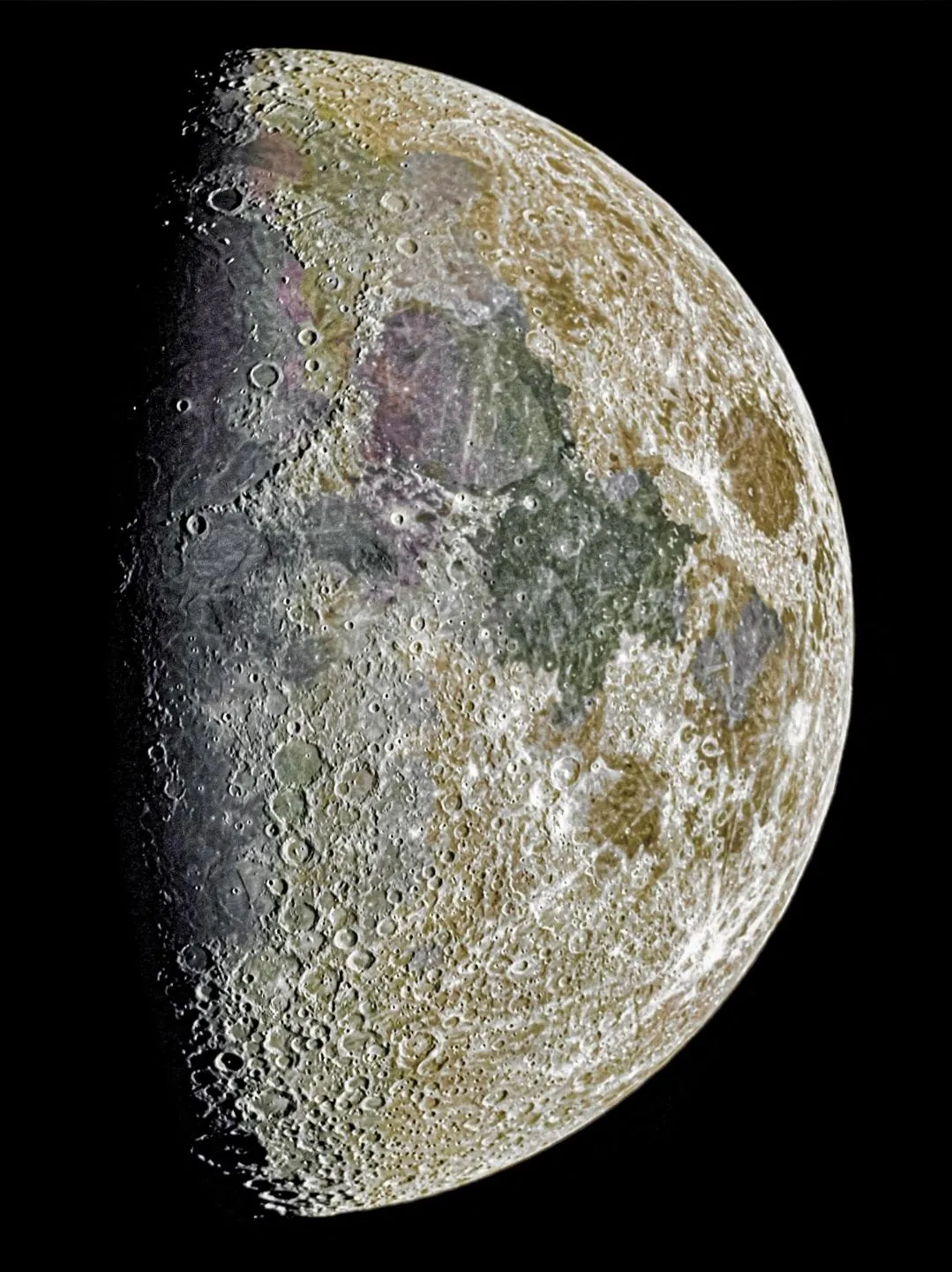
Rocket-propelled hoppers hung over the Moon in much the same way that bricks don’t
The masons arrive first: how robots will raise a Moon colony before the flags do
A Moon colony in 10 years will not look like a city. It will look like a construction site that learned to live without coffee breaks. NASA’s Moon Base program, announced at the March 24, 2026 Ignition event, is a 3-phase campaign to put an enduring outpost near the lunar south pole, with Phase 1 running through about 2028–2029 as a high-cadence robotic logistics problem and later phases adding power, habitats, and crew.
China and Russia’s International Lunar Research Station is the parallel architecture: reconnaissance already done, construction framed for 2026–2035, utilization after 2036, with Chang’e-8 slated to test in-situ resource use near the south pole.
The honest 10-year picture is not glass domes full of people. It is landers, survey robots, cargo movers, teleoperated rovers, hoppers, and eventually printers that turn dust into pads and walls while humans visit in short, expensive bursts.
Why robots build first
Lunar construction fails if it waits for astronauts. Vacuum, 14-day nights, abrasive dust, radiation, and a surface temperature swing that would ruin most terrestrial machines make human masons a luxury. ICON’s Jason Ballard has put the axiom plainly: robots are the only viable way to build in space; people are too slow, too costly, and too fragile, and machines can work around the clock.
The economics agree. ICON has used a figure of about $15,000 per kilogram to the surface to show why shipping a 350-square-foot printed house’s feedstock would cost on the order of $1.4 billion. Local dust is the only budget that scales.
So the first colony is a robot logistics chain: land, survive the night, move cargo, map ice and slopes, keep clear of landing plumes, and leave hardware that the next lander can use.
NASA’s Phase 1: robots as the foundation crew
NASA’s public Moon Base history is a procurement map, not a brochure. After Ignition, the agency issued RFIs and RFPs, then named the first missions and partners. In May 2026 it selected Astrolab and Lunar Outpost for lunar terrain vehicles, Blue Origin to deliver those vehicles, and Firefly to carry JPL’s MoonFall drones. On June 30, 2026 it selected Astrobotic, Firefly Aerospace, and Intuitive Machines for 4 late-2028 science deliveries totaling nearly $600 million under CLPS. In August it showed the first 4 commercial landers in assembly. In September 2026 it opened NextSTEP-3 Appendix A for vertical solar arrays, oxygen from regolith, radioisotope power, in-space manufacturing, and nanomaterials.
That is colonization as industrial policy: buy many small robotic missions, force industry to close power and oxygen gaps, and treat the south pole as a construction lot.
Blue Origin is the heavy truck. Blue Moon Mark 1 Endurance is the cargo lander for Moon Base I, targeted no earlier than fall 2026 to Shackleton Connecting Ridge with plume cameras and a laser retroreflector. MK1 is a single-launch cargo ship with up to 3 metric tons of payload, Power Towers above 10 kW on polar peaks of near-continuous light, and later MK1-103 and MK1-104 tasked to deliver the 2 LTVs. NASA’s May 26, 2026 award to Blue Origin was $188 million with a $280.4 million option for those rover deliveries.
Astrobotic is the infrastructure lander. Griffin-1 is designated Moon Base II, an infrastructure-class vehicle meant to put more than 500 kg of cargo on the surface, including Astrolab’s FLIP rover, BEACON CubeRover, and ESA’s LandCam-X. Griffin is framed as a late-2026 south-pole delivery on the path to more than 20 landings through 2029.
Astrolab is mobility in two sizes. FLIP is the technology-demonstration rover riding Griffin: full-size batteries, Venturi hyper-deformable wheels, night-survival thermal design, dust and lidar experiments, and a rehearsal for the larger FLEX logistics rover. In May 2026 NASA awarded Astrolab about $219 million for CLV-1, a compact crewed lunar vehicle derived from FLEX, sized to fold onto a CLPS lander, later able to carry 2 astronauts, climb about 20-degree slopes, and work crewed, teleoperated, or autonomous. NASA surface ops language has LTVs standing off about 2 km during landings, then driving in to collect crew, running about 10 km sorties with people and hundreds of kilometers uncrewed over life.
Lunar Outpost is the other wheelset. Pegasus, a lighter cut of Eagle, won about $220 million. Consortium partners include MDA Space, Leidos, General Motors, and Goodyear. Public figures: about 1 metric ton class, 2 crew, speeds above 9 mph / about 10 km/h, year-class surface life, on the order of 900 km range in company materials, crewed / teleoperated / autonomous. These vehicles are for site planning, hazard mapping, moving materials, and pre-staging base cargo. Eagle remains the longer-duration truck behind Pegasus.
Firefly Aerospace carries the scouts. NASA selected Firefly to fly JPL’s MoonFall drones. Firefly also holds a 2028 CLPS science delivery at $144.2 million. Intuitive Machines holds the sibling $148.3 million delivery. Astrobotic’s 2-delivery award was $297.9 million.
Northrop Grumman is recycling canceled Gateway HALO avionics and power hardware into lunar surface tech demos.
ICON is the mason. Project Olympus is a robotic additive-construction system that uses Laser Vitreous Multi-material Transformation: high-power lasers melt local regolith into ceramic-like structure with energy, not imported cement. NASA has funded the work through SBIR and construction-tech programs. ICON has run Duneflow on a Blue Origin suborbital flight, printed Mars Dune Alpha at about 1,700 square feet at Johnson Space Center, and briefed concepts in which the first full-scale surface construction robot completes multiple CLPS-class landing pads plus connecting roads. Sell list: pads, roads, shelters, then habitats. Buy list: transit, power, and comms for supervised autonomy.
NASA’s September 8, 2026 Lunar Enabling Infrastructure Accelerator asks for vertical solar arrays, oxygen from regolith, Stirling radioisotope power, factory processes in vacuum, and nanomaterials. Proposals due October 8, 2026.
The other construction site: ILRS and Chinese robots
ILRS is a China-led station with Russia and partners, construction massed in the 2030s after Chang’e-7 resource scouting and Chang’e-8 ISRU tests. Chang’e-7 was postponed in August 2026. Chinese laboratory briefings describe survey robots, transport robots moving regolith, large 3D-print robots stacking structure, and dexterous assembly robots. HKUST has shown a roughly 100 kg / 220 lb wheeled porter with 2 arms for Chang’e-8-class work. China has demonstrated two-way Earth–Moon laser comms at 100 Mbps downlink.
What 10 years can actually look like (2026–2036)
Years 1–3 (now through 2028): robotic cadence. Endurance at Shackleton Ridge. Griffin-1 / Moon Base II with FLIP. Firefly MoonFall hops. CLPS flights. Astrolab CLV-1 and Lunar Outpost Pegasus land ahead of Artemis IV (public target 2028). No village. A few machines, packed dust, a radio that works.
Years 3–7 (2028–2032): two rover types doing 10 km crewed loops and much longer unmanned logistics, early solar or radioisotope nodes, first ISRU oxygen tests. ICON-class printing, if it flies, starts with pads, short roads, berms. Crew visits remain expeditionary.
Years 7–10 (2032–2036): NASA Phase 3 language points at semi-permanent habitation, a fission source, longer-range pressurized mobility, and a large launch/landing count. Public cost talk has ranged from about $20 billion over 7 years to about $30 billion. China aims for a basic ILRS model in the same decade. A 2026 study arguing there will be no lunar cities anytime soon is the right cold water: ice and power budgets do not support 100,000 people. They can support a research outpost if robots keep the lights and the air coming.
In 10 years, if the machines work: a south-pole worksite with surveyed ice and keep-out zones; 2 families of U.S. terrain vehicles plus scouts and hoppers; cargo landers used as temporary sheds and power posts; first printed or sintered pads and berms; short crew rotations; a Chinese-led robotic station on a different clock; no downtown.
The romantic error is thinking the colony begins when a boot prints a sole. The scholarly fact is that the colony begins when a robot survives the night, picks up a crate, and puts it where the next robot can find it.
- NASA Moon Basehttps://www.nasa.gov/reference/moonbase-about/
- Astrolab FLIP roverhttps://www.astrolab.space/flip-rover/
The lunar brief
Four stories moving the Moon recently. Tap a card to open it. Read or skip from any story.